Technological Breakthrough: TDLAS Laser Spectroscopy Technology Conquers Core Industry Pain Points
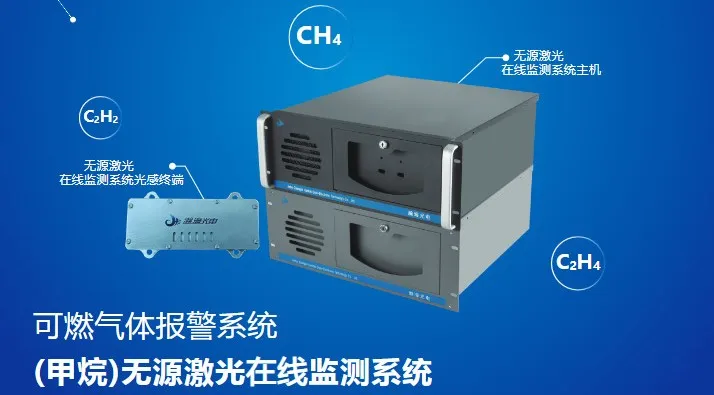
Traditional oil and gas pipeline monitoring methods either rely on manual inspection, suffering from limitations of "low efficiency, high cost, and incomplete coverage", or use conventional sensors, which are inevitably plagued by "frequent false alarms, high missed detection rates, and poor adaptability". Guoke Hanhai's passive laser online monitoring system, developed based on Tunable Diode Laser Absorption Spectroscopy (TDLAS) technology, fundamentally solves these pain points:
Ultra-high sensitivity, zero tolerance for missed detections: Leveraging the high monochromaticity and high energy density of lasers, the system achieves gas concentration detection at ppm/ppb levels (parts per million/parts per billion). Even trace gases from minor pipeline leaks can be accurately captured, completely eliminating the risk of "missed detections".
Real-time response, no possibility of delay: The absorption reaction between lasers and gas molecules is as fast as 0.1 seconds, with monitoring data transmitted to the control center in real time. Compared to the inefficiency of manual inspection (requiring 20 people/day for 100 kilometers), it truly achieves "leakage detected immediately, early warning triggered instantly".
Passive design, full adaptability to complex working conditions: The core optical sensing terminals of the system require no on-site power supply and transmit data via optical fibers. This not only avoids electrical safety hazards in flammable and explosive environments but also operates stably under complex conditions such as extreme temperatures (-40℃~+70℃), uninhabited areas, and buried blind spots, realizing "full-coverage monitoring".
Practical Verification: Benchmark Cases Demonstrate Strength from Long-Distance Trunklines to Urban Ring Pipelines
Guoke Hanhai's passive laser online monitoring system has been applied in multiple key domestic oil and gas pipeline projects, proving its technical reliability through practical results:
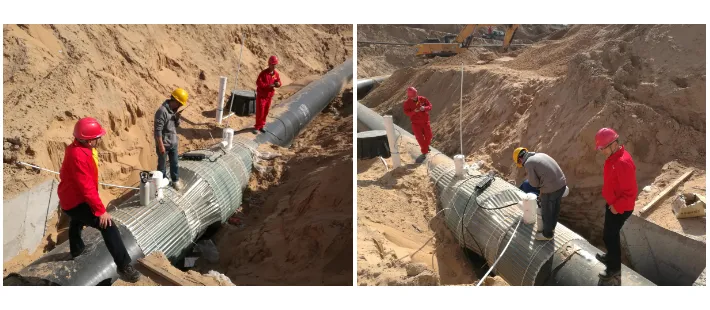
1.Shaanxi-Beijing Line 4: The world's first online monitoring network for long-distance buried pipelinesIn 2017, the system was put into operation on the Shaanxi-Beijing Line 4 long-distance pipeline, building a 24/7 online monitoring network for buried pipelines and insulating joints. Previously, the buried sections of long-distance pipelines had been "blind spots" in safety management due to the lack of effective monitoring methods. Guoke Hanhai's technology achieved "real-time monitoring of leaks in enclosed spaces without power supply" for the first time, completely resolving safety hazards in the buried sections of long-distance pipelines and providing a benchmark solution for subsequent pipeline integrity management.
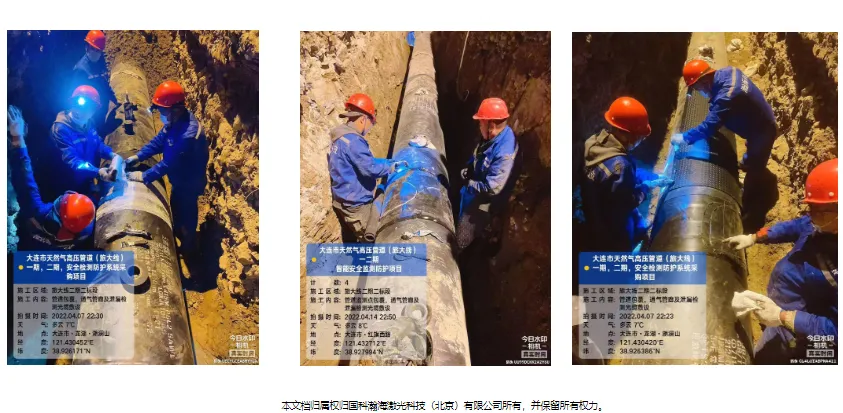
2.Dalian Lüda Line: "Comprehensive Protection" for 36.75-Kilometer PipelineIn the Phase II project of Dalian Natural Gas Pipeline (Lüda Line), the system covers the entire 36.75-kilometer buried pipeline, from Muchengyi High-Medium Pressure Regulating Station to Longtou Town High-Medium Pressure Regulating Station, with every section under "laser monitoring" protection. Through the combination of optical sensing terminals and optical fiber transmission, the project realizes real-time capture and precise positioning of pipeline leaks, effectively preventing risks in high-consequence areas and ensuring stable natural gas supply in Dalian.
3.Wuhan Gas Ring City Project: "Health Monitoring" for Urban Energy "Blood Vessels"Targeting the characteristics of urban gas ring pipelines – "complex working conditions, dense population, and high safety requirements" – the system is linked with the GIS system of urban gas pipelines. It not only monitors leaks in real time but also analyzes pipeline operation trends through data accumulation, predicting potential issues such as corrosion and aging in advance. It provides "intelligent support" for the safe supply and pipeline network planning of Wuhan's urban gas.
Economic Value: Significant Reduction in Whole-Life Cycle Costs with Outstanding Cost-Effectiveness
For oil and gas enterprises, balancing safety and costs has always been a management priority. While ensuring safety, Guoke Hanhai's technology can significantly reduce whole-life cycle costs:
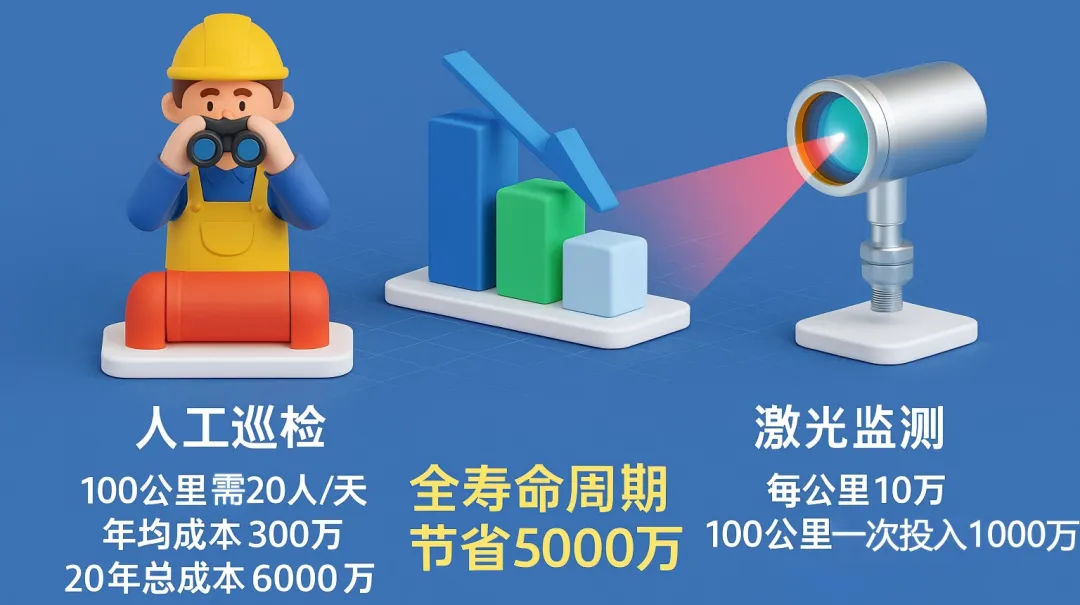
Manual Inspection VS Laser Monitoring: The Cost Gap is Obvious
Taking a 100-kilometer pipeline as an example:
Traditional manual inspection requires 20 personnel/day to complete one round of inspection, with an annual cost as high as 3 million yuan and a total whole-life cycle cost of 60 million yuan over 20 years.
Guoke Hanhai's laser monitoring system requires a one-time investment of only 100,000 yuan per kilometer, totaling 10 million yuan for 100 kilometers. It has the same service life as the pipeline (no frequent replacement or maintenance needed), saving 50 million yuan in whole-life cycle costs and demonstrating remarkable cost-effectiveness.
Indirect Value: Avoiding Accident Losses and Improving Operational Efficiency
Beyond direct cost savings, the system's "active early warning" function prevents accidents such as explosions and environmental pollution caused by leaks. A single oil and gas pipeline leakage accident typically incurs hundreds of millions of yuan in handling costs (including compensation, maintenance, and production suspension losses). Guoke Hanhai's technology prevents accidents at the source, bringing inestimable indirect loss reductions for enterprises.
Future Outlook: From "Safety Guarantee" to "Green and Low-Carbon", Building a Smart Pipeline Ecosystem
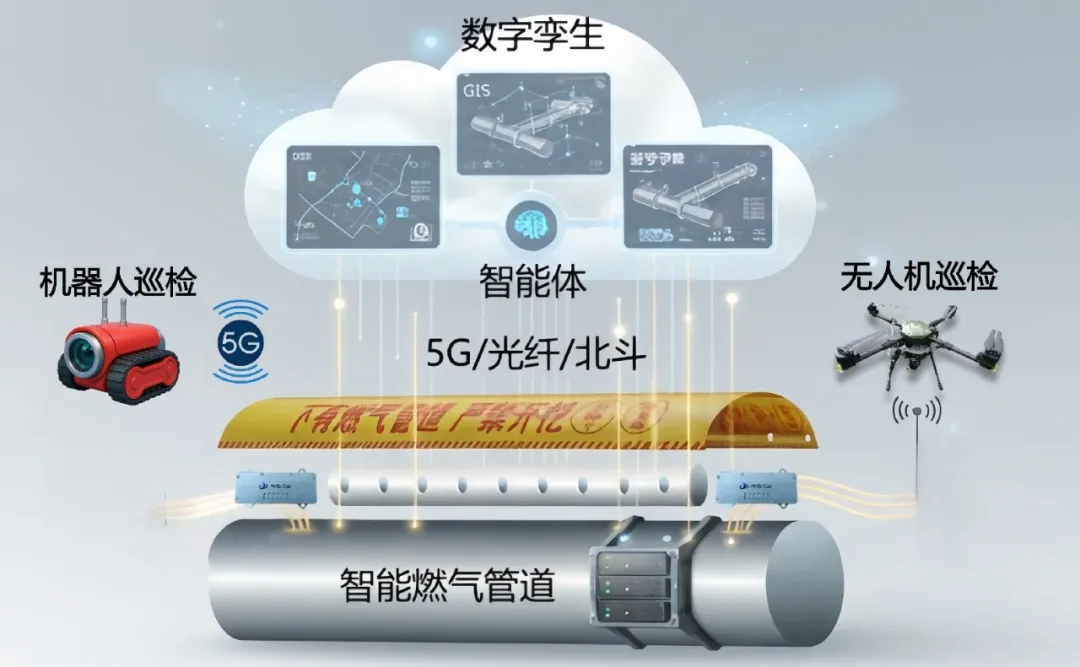
With the advancement of the "Dual Carbon Goals" and "Smart Pipeline Network" construction, Guoke Hanhai does not stop at "leakage monitoring". Instead, it takes passive laser technology as the core to build an integrated "terminal-edge-pipeline-cloud" solution:
Terminal: Integrate sensors, inspection robots, and UAVs to achieve "multi-dimensional perception".
Edge: Realize real-time data processing through edge computing to reduce cloud pressure.
Pipeline: Rely on 5G, optical fiber, and Beidou systems to ensure "high-speed and stable" data transmission.
Cloud: Combine GIS, AI, and digital twin technologies to build a "smart pipeline network management platform", realizing the upgrade from "single-point monitoring" to "global collaboration" and from "safety guarantee" to "green and low-carbon".
In the future, Guoke Hanhai will continue to empower the oil and gas pipeline industry with laser technology, helping enterprises achieve the development goals of "safety, efficiency, and low carbon", and contributing more technological strength to national energy security and the "Dual Carbon" cause.