
Focus on China Natural Gas Development Report 2025: Guoke Hanhai's Laser Technology Escorts the Safe and Low-Carbon Development of the Natural Gas Industry
Focus on China Natural Gas Development Report 2025
According to the news on the website of the National Energy Administration on August 29, China Natural Gas Development Report (2025) (hereinafter referred to as the "Report") was officially released. It comprehensively sorts out the development trend of the domestic and international natural gas industry in 2024, and clarifies the future reform direction and development prospects. Against the backdrop of the medium-to-high growth of natural gas consumption, the continuous consolidation of supply capacity, and the accelerated advancement of low-carbon transformation, Guoke Hanhai Laser Technology (Beijing) Co., Ltd. takes laser monitoring technology as the core, providing precise perception solutions for the entire natural gas industry chain from three dimensions: safety guarantee, low-carbon emission reduction, and digital-intelligent upgrading, to boost the high-quality development of the industry.
Consumption Growth and Structural Optimization: Lasers Guard Gas Safety in Multiple Scenarios
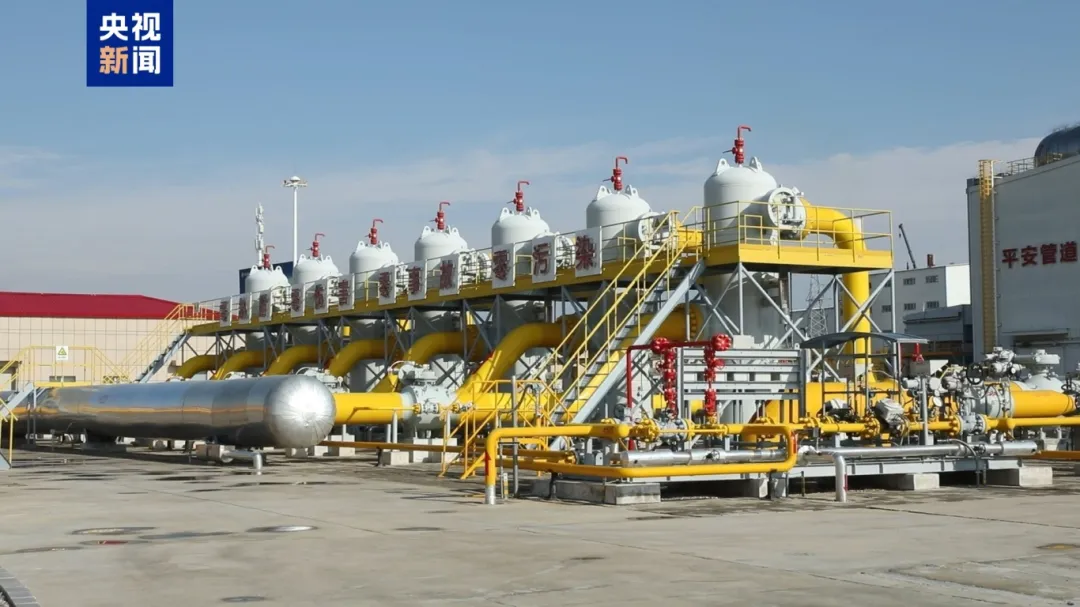
In 2024, China's natural gas consumption increased by 7.3% year-on-year, accounting for 8.8% of primary energy consumption. Urban gas, industrial fuel, and power generation gas have become the core growth drivers — record-high sales of LNG heavy-duty trucks boosted transportation gas demand, industrial equipment upgrades drove up fuel gas consumption, and the need for gas-fired power peaking led to a 9.5% year-on-year rise in power generation gas use. The upgraded gas demand across various scenarios has raised higher requirements for "full-chain safety monitoring".
Targeting the risk characteristics of each link in the natural gas industry chain, Guoke Hanhai provides customized laser monitoring solutions
Urban gas sector: In residential, public welfare and commercial gas scenarios, wall-mounted passive laser monitoring terminals are deployed. These terminals require no power supply, eliminate the risk of electric sparks, and monitor methane leaks in real time. For example, in the Hefei Chaohu LNG Filling Station project, 6 optical sensing terminals cover key areas such as storage tanks and dispensers, responding to ppm-level leaks within 10 seconds and building a solid safety barrier for LNG heavy-duty truck refueling and residential gas use.
Industrial fuel sector: To meet the natural gas needs of industrial kilns and heating furnaces, the Fixed Reflective Laser Gas Telemeter forms a 100-meter monitoring optical path to accurately capture trace leaks at pipeline joints and valves. Taking the Jinan Refining & Chemical project as an example, the equipment covers a 1,000-meter pipe gallery, monitoring hydrogen sulfide and methane in real time to prevent safety accidents caused by industrial gas leaks.
Power generation gas sector: For the gas supply link of gas-fired peaking power stations, the original wall-mounted passive laser monitoring terminal is directly embedded in the high-temperature gas combustion chamber to monitor trace methane concentrations in real time, ensuring the safe and stable operation of gas-fired generator units. It can also simultaneously monitor ammonia slip and gas leaks in desulfurization and denitrification processes, guaranteeing safe and efficient power generation.
Consolidated Supply Capacity and Improved Facilities: Laser Technology Fills Monitoring Blind Spots
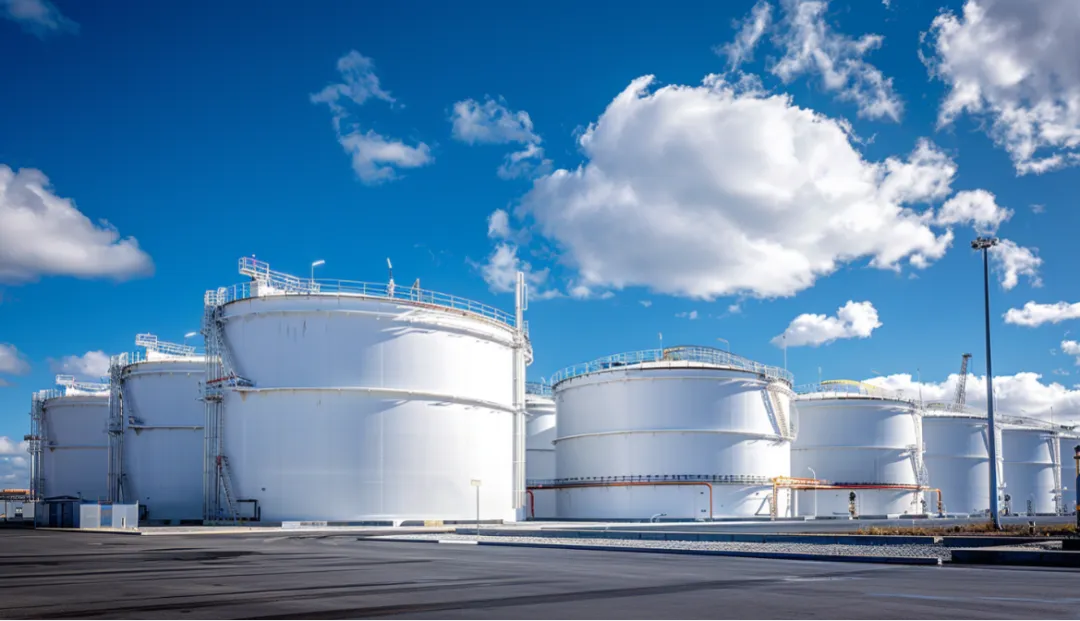
The Report points out that in 2024, China's natural gas output reached 246.5 billion cubic meters (a year-on-year increase of 6%), with unconventional natural gas output exceeding 100 billion cubic meters. The China-Russia Eastern Route Natural Gas Pipeline was fully commissioned, and the 4th West-East Gas Pipeline was put into operation. The total mileage of national long-distance transmission pipelines exceeded 128,000 kilometers, and the newly added unloading capacity of LNG receiving terminals reached 43.68 million tons per year. As upstream exploration and development move toward deep and ultra-deep layers, and the midstream pipeline network forms a "national integrated network", scenarios such as "deep underground, long-distance transmission, and outdoor areas without power supply" — which are difficult to cover by traditional monitoring methods — have become new challenges for safety assurance.
Guoke Hanhai addresses scenario-specific challenges with a diverse range of laser equipment
Upstream exploration and development: Tailored for the high-sulfur, deep shale gas extraction environment in the Sichuan Basin, the laser equipment resists high temperature, high pressure, and strong corrosion, accurately monitoring hydrogen sulfide and methane leaks at wellheads. For example, in the Southwest Oil & Gas Field project, 6 sets of Fixed Reflective Laser Gas Telemeters achieve ppm-level detection of hydrogen sulfide with a concentration of 50%, eliminating "invisible risks" in deep underground extraction.
Midstream pipeline transportation: For long-distance pipelines such as the China-Russia Eastern Route and the 4th West-East Gas Pipeline, fixed reflective laser equipment forms a 1,000-meter linear monitoring optical path. As seen in the Jinan Refining & Chemical Pipe Gallery project, laser beams span above the pipelines to capture methane leaks in real time during transmission, providing data support for the safe operation of the "national integrated network".
LNG receiving terminals and gas storage facilities: IoT laser monitors (solar-powered type) are deployed to solve monitoring problems in outdoor areas without power supply. In the Tianjin LNG Receiving Terminal SCV Platform project, the equipment is powered by solar energy, continuously monitoring gas emissions after torch combustion and tank leaks without manual inspection, with data uploaded to the management platform in real time. For ultra-large LNG tank groups, fixed scanning laser gas telemeters are configured to provide 360-degree dead-angle-free coverage of the tank area, capturing fugitive emissions from breathing valves and flanges.
Accelerated Low-Carbon Transformation: Lasers Empower Carbon Monitoring and Emission Reduction
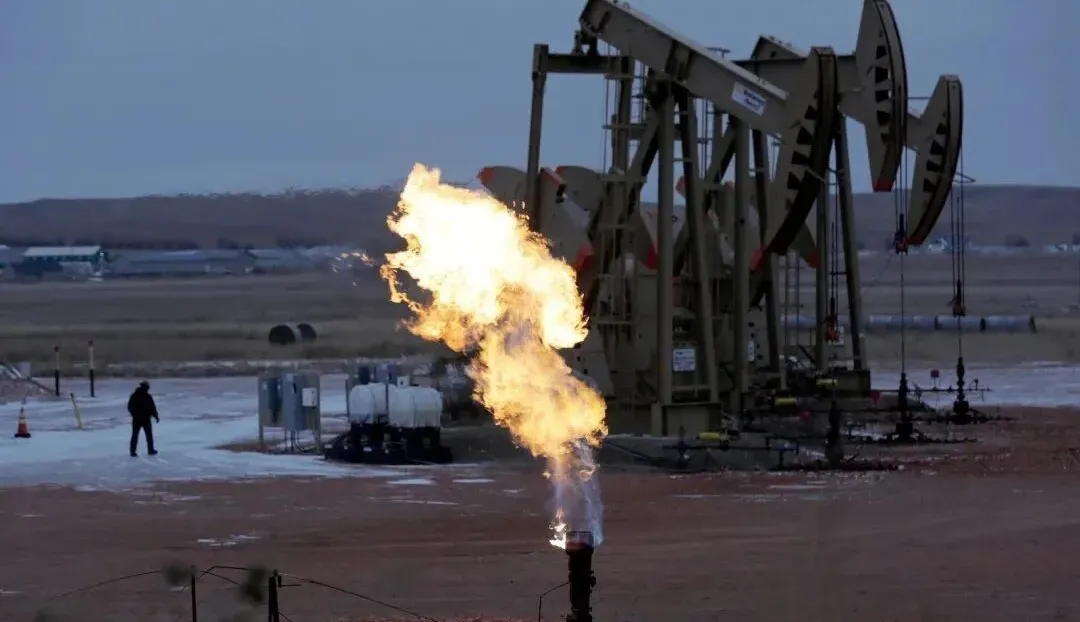
The Report emphasizes that the natural gas industry is accelerating the pace of "greening and carbon reduction" — oil and gas fields are promoting the multi-energy complementarity of "photovoltaic + wind power + natural gas", while the downstream is exploring technologies such as hydrogen-blended natural gas and CCUS (Carbon Capture, Utilization and Storage). Meanwhile, the implementation of the Interim Regulations on the Administration of Carbon Emission Rights Trading requires enterprises to improve the quality of carbon emission data. Against this backdrop, precise gas monitoring has become the core support for carbon accounting and verification of emission reduction effects.
Guoke Hanhai's laser technology provides "hard data" for the low-carbon transformation of the natural gas industry
Accurate carbon emission accounting: In-situ through-type laser gas detectors can simultaneously monitor greenhouse gases such as carbon monoxide, carbon dioxide, and methane. For example, in the Henan Jiaozuo Waste Incineration Power Plant project, the equipment captures real-time carbon dioxide emission data after natural gas combustion, and accurately calculates carbon emissions combined with power generation, providing traceable data support for enterprises to participate in carbon market transactions.
Methane leak control: As a greenhouse gas with a global warming potential 28 times that of carbon dioxide, the control of methane fugitive emissions is a key focus of low-carbon efforts. Guoke Hanhai's laser equipment achieves ppm-level detection of methane. In the Sinopec Oil & Gas Field project, it monitors methane leaks at gas wells and gathering stations in real time, helping enterprises reduce emissions of "potent greenhouse gases".
Emission reduction project verification: For emission reduction projects such as hydrogen-blended natural gas and CCUS, laser equipment monitors changes in gas concentrations before and after renovation. In the Guangdong H-class hydrogen-blended natural gas generator unit project, the equipment monitors the hydrogen blending ratio and post-combustion carbon dioxide emissions in real time, quantifies the project's emission reduction effect, and provides data support for CCER (Chinese Certified Emission Reduction) verification.
Trend of Digital-Intelligent Integration: Laser Data Connects Full-Chain Management
The Report proposes that the integration of artificial intelligence with the oil and gas industry is accelerating, driving the digital and intelligent upgrading of the industry. Guoke Hanhai's laser monitoring system is not an isolated "data collection tool", but a "front-end perception node" that deeply collaborates with the natural gas full-chain management platform:
Real-time data transmission: Laser equipment uploads data such as leak concentration and carbon emissions to the enterprise production management platform and carbon management platform in real time through optical fiber or wireless communication, avoiding errors caused by "secondary entry".
Automatic accounting and analysis: Combined with data such as natural gas output, pipeline transmission volume and power generation, laser monitoring data can automatically calculate the energy consumption and carbon emissions per unit product, generating reports that comply with industry standards.
Full-process evidence storage: Data is stored using blockchain technology to ensure immutability, meeting the data supervision requirements of the Interim Measures for the Administration of Carbon Emission Permit Trading , and providing a traceable data chain for regulatory authorities and enterprises.
With the Precision of Lasers, Accompanying the Natural Gas Industry for Steady and Long-Term Development

The China Natural Gas Development Report 2025 outlines the development blueprint of the natural gas industry featuring "safe supply guarantee, low-carbon transformation and digital-intelligent upgrading", and precise front-end monitoring is the foundation for realizing this blueprint. Guoke Hanhai will continue to deepen the integration of laser technology with natural gas scenarios, from upstream deep underground exploration to downstream terminal utilization, from safety monitoring to carbon management support. With the "precision of light", it escorts the high-quality development of the natural gas industry and helps the implementation of the dual-carbon goals and the energy security strategy.